Before the Clock Starts and After It Stops: The Billions Quietly Stolen From America's Workers
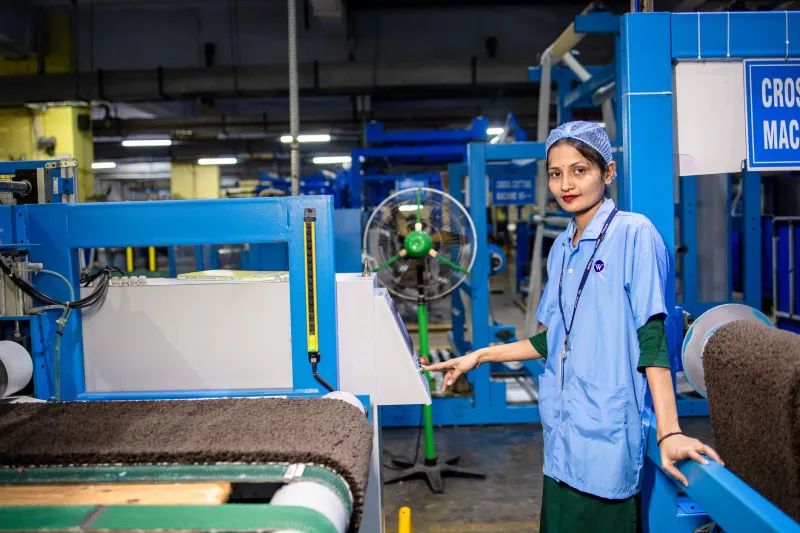
Somewhere in a warehouse outside Memphis, a fulfillment center employee arrives fifteen minutes early — not by choice, but by necessity. She must pass through a mandatory security screening, retrieve her equipment from a storage locker, and log into her workstation before her official shift begins. None of that time is compensated. Across town, a home health aide checks her phone at 9:30 p.m. to respond to a supervisor's message about tomorrow's patient schedule. That time is not compensated either. These moments, invisible to payroll systems and largely ignored by enforcement agencies, are the building blocks of one of the most widespread and underreported forms of wage theft in the United States.
The Economic Policy Institute estimates that wage theft — encompassing minimum wage violations, overtime theft, and off-the-clock work — costs American workers more than $50 billion annually. A significant and chronically underestimated portion of that figure flows directly from unpaid labor performed outside recorded shift hours. Unlike the dramatic headline cases of employers falsifying records, off-the-clock theft is often quiet, normalized, and structurally embedded into how companies design their workplaces.
What Off-the-Clock Labor Actually Looks Like
The term "off-the-clock work" encompasses a broad and often misunderstood range of activities. It is not merely the occasional email answered after dinner. It is the systematic expectation — sometimes explicit, often implied — that workers will absorb job-related tasks into their personal time without compensation.
For retail and warehouse workers, this frequently means pre-shift duties: setting up registers, counting inventory, attending mandatory safety briefings, or waiting in line for security bag checks before the clock officially starts. For healthcare workers, it manifests as charting patient notes after a shift ends because there was no time during it. For restaurant employees, it surfaces as mandatory pre-opening prep work logged before the time clock is activated. For salaried workers misclassified as exempt from overtime, it is the unspoken assumption that answering messages at midnight is simply part of the job.
A 2021 survey conducted by the National Employment Law Project found that more than one in five hourly workers reported being regularly required to work before or after their scheduled hours without pay. Among low-wage workers — those earning less than $15 per hour — the rate was significantly higher, reflecting how economic vulnerability is weaponized to extract unpaid labor from those least positioned to resist.
The Law Is Clear. Enforcement Is Not.
The Fair Labor Standards Act (FLSA), enacted in 1938, is unambiguous on this point: employers must compensate workers for all hours that are "suffered or permitted" to be worked. The legal standard does not require a direct order. If an employer knows — or reasonably should know — that an employee is performing work, that time must be paid. Pre-shift security screenings were explicitly addressed in the Supreme Court's 2014 ruling in Integrity Staffing Solutions v. Busk, which unfortunately carved out a narrow exception for activities deemed not "integral and indispensable" to the job. Critics argue that ruling handed corporations a blueprint for structuring mandatory unpaid time in ways that skirt liability.
Beyond legal ambiguity, enforcement infrastructure is simply inadequate. The Department of Labor's Wage and Hour Division employs roughly 800 investigators to oversee approximately 143 million workers across the country. That ratio — one investigator for every 178,000 workers — means proactive enforcement is functionally impossible. The agency depends heavily on worker complaints, yet filing a complaint requires knowledge of one's rights, confidence that retaliation will not follow, and the willingness to navigate a bureaucratic process that can take years to resolve. For workers living paycheck to paycheck, that calculus rarely favors coming forward.
Employers, meanwhile, have grown sophisticated in how they structure expectations. Policies are rarely written down in ways that explicitly require unpaid work. Instead, understaffing creates conditions where pre-shift preparation becomes unavoidable. Performance metrics punish workers who are not "ready" the moment their shift begins, effectively mandating earlier, uncompensated arrival. Managers communicate informally, insulating companies from paper trails.
The Digital Frontier of Unpaid Time
The proliferation of workplace communication technology has opened an entirely new frontier for off-the-clock extraction. Smartphones, messaging apps, and cloud-based scheduling platforms have dissolved the boundary between work time and personal time in ways that the FLSA's drafters could never have anticipated.
A 2023 report by the American Time Use Survey found that workers in supervisory or client-facing roles spend an average of 4.5 hours per week engaging with work-related communications outside their scheduled hours. For hourly workers, this time is almost universally uncompensated. The expectation of digital availability has become so normalized that many workers do not even register it as labor — a psychological outcome that benefits employers enormously.
Some states are beginning to respond. California has long required that all time controlled by an employer be compensated, and its courts have interpreted that standard broadly. New York has pursued enforcement actions targeting industries with documented off-the-clock violations, including fast food and warehousing. Illinois passed the One Day Rest in Seven Act with provisions requiring clearer delineation of compensable time. But these efforts remain fragmented, and in states with weaker labor protections — particularly across the South and Midwest — off-the-clock expectations continue largely unchallenged.
State-Level Campaigns and the Push to Criminalize Wage Theft
Advocacy organizations and progressive legislators are increasingly arguing that civil penalties alone are insufficient to deter systematic wage theft. A growing coalition of worker centers, labor unions, and legal advocates is pushing states to classify willful wage theft — including structured off-the-clock requirements — as a criminal offense.
Minnesota passed legislation in 2023 strengthening criminal penalties for wage theft, including provisions applicable to off-the-clock violations. New Mexico and Colorado have pursued similar statutory reforms. Proponents argue that criminal liability changes the risk calculation for corporate actors who currently treat civil wage theft settlements as a manageable cost of doing business. When executives face personal legal exposure, the structural incentives shift.
Worker education is equally critical. Many workers who are being robbed do not know they are being robbed. Campaigns to expand awareness of FLSA rights — in multiple languages, through trusted community organizations, and in formats accessible to workers with limited time — are essential infrastructure for any enforcement strategy to succeed.
What Accountability Requires
Off-the-clock wage theft is not an accident or an oversight. It is the predictable outcome of a labor system in which enforcement is underfunded, legal standards are subject to corporate-friendly interpretation, and workers bear most of the risk of speaking up. The billions extracted through unpaid pre-shift and post-shift labor represent a direct transfer of wealth from working families to corporate balance sheets — a subsidy paid not in taxes or policy, but in stolen minutes that compound into stolen lives.
Reclaiming that time requires more than individual workers asserting their rights, though that matters. It requires robust public investment in labor enforcement, criminal accountability for willful violators, and a cultural reckoning with the normalization of unpaid work as professional virtue. The worker who arrives early to set up her workstation is not demonstrating dedication. She is being robbed. The distinction matters — and naming it clearly is the first step toward demanding something better.