Meetings You Can't Skip, Elections You Can Delay: Inside the Modern Anti-Union Campaign
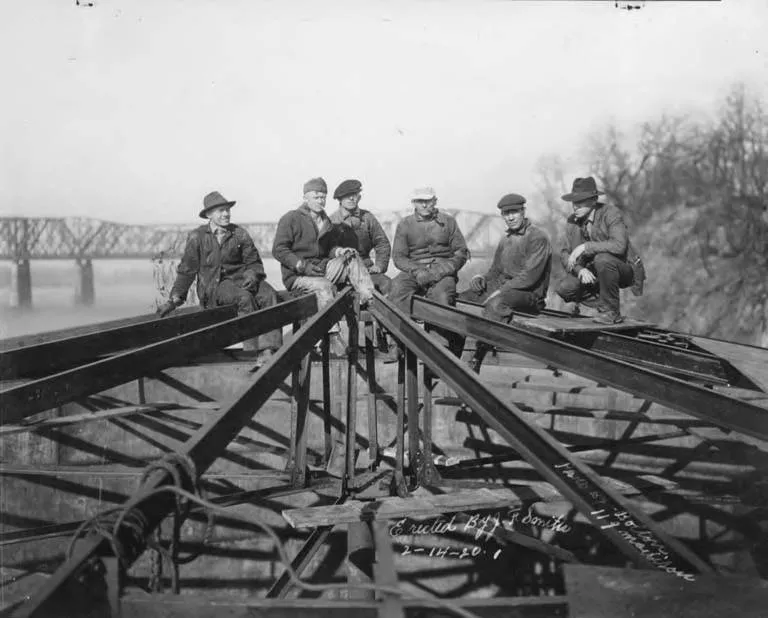
Photo: Bolton, Public domain, via Wikimedia Commons
When a majority of workers at a facility sign authorization cards, the law formally recognizes that they are entitled to a choice about representation. What follows in a great many American workplaces is not a debate between peers but a campaign — scripted by consultants, delivered by supervisors, and underwritten by a legal apparatus that treats delay as its most reliable instrument.
Union avoidance is not a shadowy rumor. By one widely cited estimate, US employers spend roughly $340 million annually on consultants who specialize in defeating organizing drives. Those consultants do not usually stand up in the break room and denounce unions in their own names. They write the talking points, coach the managers, design the one-on-one scripts, and time the announcements. Their product is not persuasion so much as attrition.
A Legal Architecture Designed for Delay
The National Labor Relations Act of 1935 protects the right of private-sector workers to organize and bargain collectively. Section 8(a) makes it an unfair labor practice to interfere with those rights. Those protections are real, and they matter. They are also narrow in ways that the drafters of the New Deal could not have anticipated.
The statute contains no timetable for resolving a representation petition. It provides no meaningful penalty against executives who violate the law — no fines scaled to corporate revenue, no individual liability, no punitive damages. Remedies are largely backward-looking: reinstatement and back pay for workers who were unlawfully fired, which arrive months or years after the damage is done. For a large employer, the cost of breaking the law can be cheaper than the cost of compliance.
Disclosure rules meant to expose the industry have long been porous. Employers may hire consultants to direct a campaign as long as those consultants stay out of direct communication with workers — an arrangement that produces a fraction of the transparency Congress intended. In 2025, the federal labor board's new majority signaled it would unwind precedents, including the Cemex framework, that had made it somewhat easier to hold employers accountable for serious misconduct during organizing drives. The message to corporate counsel was unambiguous.
The Captive Audience
Perhaps no tactic is more familiar to American workers than the mandatory anti-union meeting — hourly employees pulled off the line, seated in a conference room, and told that a union would cost them their jobs, their benefits, or their relationships with management. Attendance is required. Questions are managed. Supervisors then follow up individually, in the language of care: I just want to make sure you understand what you'd be giving up.
This is lawful in most states. Connecticut became the first state to prohibit captive-audience meetings in 2022, and a handful of others have since followed. Those laws now face well-funded constitutional challenges, because the industry understands that the captive audience is the load-bearing wall of its entire model.
The Watchful Campaign
Organizing has always required discretion, and discretion has become harder to find. Employers monitor workplace messaging platforms, review social media posts, and deploy sentiment-analysis tools trained to flag words like union and contract. Some require workers to install apps on personal phones. Consultants ask managers to report who has been quiet lately, who has been asking questions about pay scales, who attended a meeting in the parking lot.
The law offers limited shelter. Employers may generally bar off-duty solicitation in work areas and restrict non-employee organizers' access to the property. What they may not do is surveil, threaten, or retaliate in ways that chill protected activity. The distance between those two statements is where most cases are litigated — and most workers, without counsel and without job security, do not litigate.
How Workers Push Back
Despite all of this, organizing continues, and it has grown more inventive. Workers are building organizing committees before a campaign goes public, mapping their own units person by person, and holding one-on-ones in homes and parking lots rather than relying on mass meetings that management can predict. They are demanding neutrality and card-check recognition from employers directly, and when those demands are refused, they are taking their case to city councils, shareholders, and customers.
Community-labor coalitions have opened a second front, tying organizing drives to local debates over public subsidies and development deals. Bargaining for neutrality in successor contracts — so that newly acquired facilities are not forced to fight the same battle twice — has become a standard demand. Federal legislation that would impose real penalties and timelines, including the PRO Act, remains stalled, which is precisely why state and municipal action has taken on new weight.
The stakes are not abstract. Union members earn meaningfully more than their nonunion counterparts in comparable jobs, are far more likely to have employer-provided health coverage and retirement plans, and are significantly more likely to speak up about safety hazards without fear of reprisal. Roughly nine in ten Americans say they approve of unions, yet private-sector density hovers near six percent. That gap is not a mystery. It is a measurement of how much employers are willing to spend to keep workers from choosing.
Why the Playbook Keeps Working
The anti-union playbook works because it exploits a structural asymmetry: employers control the paycheck, the schedule, the premises, and the clock, while workers must build collective power in the margins of a full workweek. Closing that asymmetry is the central project of labor law reform in this decade — and, until it closes, of every organizing committee that decides, against considerable odds, to try anyway.