The Gig Illusion: How Platform Companies Engineered a Workforce Without Rights
The pitch was seductive from the beginning. Drive when you want. Deliver on your schedule. Be your own boss. In the early 2010s, platform companies rolled out a vision of work that seemed to resolve the central tension of modern employment — the conflict between corporate need for flexible labor and individual desire for autonomy. For a workforce exhausted by rigid schedules and diminishing job security, the promise resonated.
A decade later, the architecture beneath that promise is visible. And it is not what was advertised.
The gig economy — encompassing ride-hailing, food delivery, freelance platforms, home services, and an expanding constellation of app-mediated labor — now employs an estimated 59 million Americans in some capacity, according to a 2023 McKinsey survey. For a growing number of those workers, gig work is not supplemental income. It is the primary source of household revenue. And for those workers, the economics of the model are quietly catastrophic.
The Independent Contractor Fiction
At the center of the gig economy's business model is a legal classification: the independent contractor. Unlike employees, independent contractors are not entitled to minimum wage protections, overtime pay, employer-sponsored health insurance, unemployment insurance, workers' compensation, or the right to organize under the National Labor Relations Act. They are, in the eyes of the law, businesses unto themselves — entrepreneurs engaging in commercial transactions with platforms that merely connect them to customers.
The classification is a fiction, and a deliberately constructed one.
True independent contractors set their own prices, choose their own clients, and determine how their work is performed. Gig workers do none of these things. A driver for a major ride-hailing platform cannot set their own fare. They cannot negotiate with individual passengers. They cannot determine which algorithm routes them to which ride or which surge pricing formula applies to their labor at any given moment. They are, in every functional sense, employees — managed by software rather than supervisors, but managed nonetheless.
The distinction matters enormously in economic terms. A 2021 study published by the Economic Policy Institute found that misclassifying a worker as an independent contractor rather than an employee saves a company between 20 and 30 percent of that worker's total compensation cost. That savings does not disappear. It is transferred directly from the worker to the platform's balance sheet.
The Real Mathematics of Gig Work
Platform companies present gross earnings prominently and costs obscurely. A delivery driver told they earned $18 per hour has not been told that they are responsible for fuel, vehicle maintenance, depreciation, and self-employment taxes — costs that, according to the IRS standard mileage rate, can amount to 67 cents per mile driven. Nor have they been told that the "hour" being measured excludes the time spent waiting for orders, driving to pickup locations, or managing the administrative burden of tracking their own earnings for quarterly tax filings.
When researchers at the MIT Center for Energy and Environmental Policy Research examined actual earnings data from ride-hailing drivers, they found that the median profit — after accounting for vehicle expenses — was $3.37 per hour. More than 74 percent of drivers in the study earned less than their state's minimum wage on a net basis.
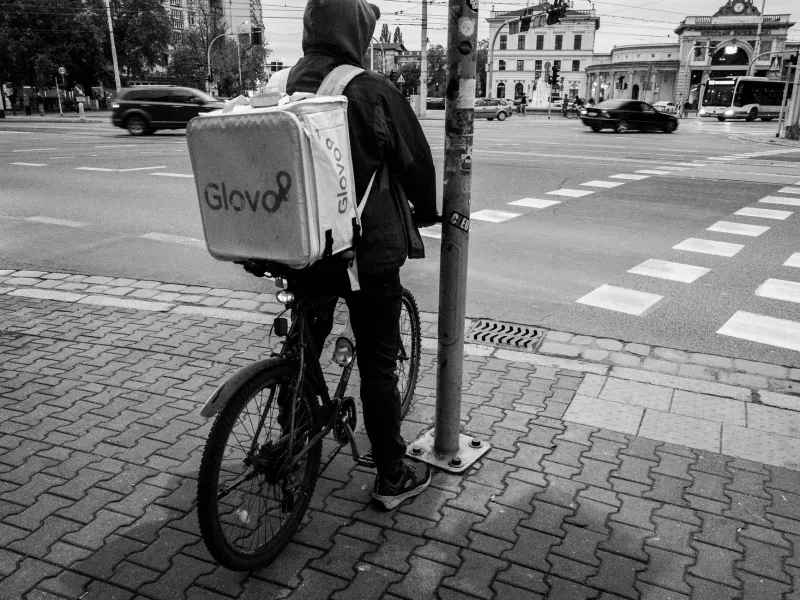
For food delivery workers, the numbers are similarly grim. A 2022 study by the Worker Institute at Cornell University found that app-based delivery workers in New York City earned an average of $7.09 per hour before expenses — well below the city's $15 minimum wage — before New York City's landmark minimum pay rule for delivery workers took effect in 2023.
The structure is not accidental. Platform companies have spent billions in lobbying and public relations to preserve a classification system that allows them to externalize the costs of employment onto their workforce. When a gig worker's car breaks down, the platform bears no cost. When a gig worker falls ill and cannot work, no sick pay accrues. When a gig worker reaches retirement age with no employer-sponsored pension and no employer contributions to Social Security beyond their own self-employment tax, the platform bears no responsibility.
The Subcontracting Parallel
The gig economy's misclassification strategy did not emerge in a vacuum. It is the technological refinement of a corporate subcontracting model that American businesses have deployed for decades to distance themselves from legal obligations to workers.
In construction, in agriculture, in janitorial services, and in warehousing, large companies have long used layers of subcontractors and staffing agencies to insulate themselves from direct employment relationships. The workers who clean office towers for Fortune 500 companies are frequently employed not by those companies but by a chain of subcontractors whose contracts can be terminated without triggering the legal consequences that would accompany laying off direct employees.
Platform technology simply made this fragmentation faster, more scalable, and more difficult to challenge. The algorithmic employer — the app that assigns, monitors, evaluates, and terminates workers — presents a more ambiguous legal target than a human manager. When there is no identifiable supervisor, the argument goes, there is no employment relationship.
Courts and regulators have been slow to update their frameworks to address this ambiguity. The ABC test — which presumes a worker is an employee unless the hiring entity can demonstrate that the work is performed outside its usual course of business, that the worker is genuinely free from its control, and that the worker is independently established in that trade — has been adopted in some states as the appropriate standard. California's Assembly Bill 5 applied this test broadly, reclassifying hundreds of thousands of gig workers as employees before platform companies spent over $200 million on a ballot initiative to carve themselves out of the law's requirements.
That campaign, which resulted in 2020's Proposition 22, is a case study in the lengths to which the platform industry will go to preserve misclassification. It was subsequently struck down as unconstitutional by a California appeals court — a decision that itself remains under appeal. The legal battle continues. The workers waiting for its resolution are working in the meantime.
The Benefits Gap
The cumulative cost of gig misclassification extends far beyond hourly wages. Benefits — health insurance, retirement contributions, paid leave, and disability coverage — represent a substantial component of total worker compensation that gig workers are systematically denied.
The Kaiser Family Foundation estimates that employer-sponsored health insurance for a single worker costs an average of $8,435 annually, with employers covering approximately 83 percent of that premium. A gig worker purchasing equivalent coverage on the individual market — assuming they qualify for no subsidies — faces that cost entirely alone, in addition to the self-employment tax differential that requires them to pay both the employee and employer portions of Social Security and Medicare contributions.
Retirement security compounds the inequality. Workers whose employers contribute to a 401(k) or pension plan accumulate wealth that gig workers, responsible for their own retirement savings in full, rarely match. Over a working lifetime, the retirement savings gap between a traditionally employed worker and a gig worker performing equivalent labor can amount to hundreds of thousands of dollars.
A Different Future Is Possible
The gig economy's current configuration is not an inevitability. It is a policy choice — one made in favor of platform profitability and against worker security. Alternative models exist and are operating.
In Denmark, a cooperative ride-hailing platform owned by its drivers operates with transparent pricing and driver profit-sharing. In the United Kingdom, following a Supreme Court ruling that Uber drivers are workers rather than independent contractors, drivers now receive minimum wage guarantees, holiday pay, and pension contributions. In New York City, the minimum pay rule for delivery workers demonstrates that municipal regulation can raise gig worker earnings without eliminating the platforms.
The question is not whether gig work can be made fair. The question is whether the political will exists to demand that it be. American workers who depend on platform income for their livelihoods deserve the same basic protections that workers in every other sector have spent generations fighting to secure. The app is new. The exploitation it enables is not.