Sweat Is Not a Safety Plan: The Case for a Federal Heat Standard

Photo: farmworker drinking water in hot field under midday sun, via img-s-msn-com.akamaized.net
In the summer of 2004, a 57-year-old farmworker named Asunción Valdivia collapsed in California's Central Valley after a day of cutting grapes in triple-digit temperatures. He died the following day. His death helped produce the nation's first state heat illness standard — and, more than two decades later, a national patchwork so uneven that a worker's odds of surviving a heat wave depend heavily on which state line they happen to work behind.
That patchwork is not an accident of geography. It is the predictable result of a federal government that has studied the problem for years while declining to regulate it, and of state legislatures that have moved in opposite directions.
The Hazard Is Not Distributed Evenly
Heat does not simply make work uncomfortable. It impairs cognition, elevates injury rates, and can progress within hours from dizziness to organ failure. Research on occupational heat exposure has found that workers in agriculture, construction, landscaping, and delivery face the sharpest risks, while indoor workers in non-climate-controlled warehouses, commercial kitchens, laundries, and fulfillment centers face a hazard that is largely invisible to the public — and often to regulators as well.
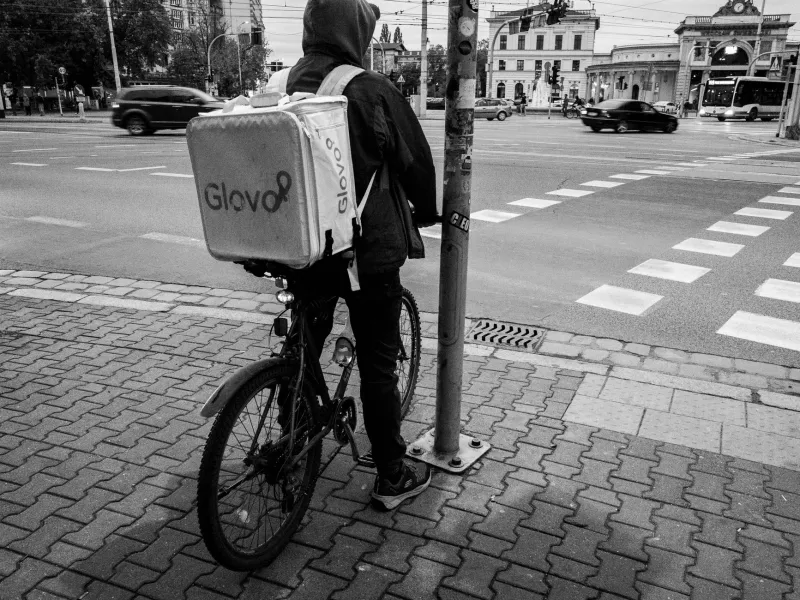
Warehouse workers describe reaching for a fan the way other workers reach for a ladder: as equipment that may or may not be provided. Kitchen workers stand beside fryers and ovens for ten-hour shifts. Delivery drivers load vans that reach dangerous interior temperatures before a single package is scanned. Postal carriers walk routes in conditions that have prompted repeated calls for federal action. The common thread is not the industry but the business model: heat safety almost always costs money, and the workers exposed to risk are rarely the ones empowered to demand it.
What Federal Law Actually Requires
The Occupational Safety and Health Act imposes a general duty on employers to provide a workplace free of recognized hazards. That language can be used to cite an employer after a death. It is far less useful before one.
For years, federal enforcement has relied on a National Emphasis Program that directs inspectors to target high-risk industries during heat waves and to conduct outreach. Outreach is not a standard. The program does not establish a specific temperature at which water, rest, shade, or acclimatization must be provided, and it does not create an enforceable right that a worker can invoke on a 104-degree afternoon.
A proposed federal heat rule was published in 2024, and its progress since then has been slow at best. In 2025 the agency signaled that its regulatory agenda would narrow, and the rule remains unfinished as the 2026 heat season approaches. Meanwhile, a separate and quieter deregulatory push has targeted the recordkeeping and reporting mechanisms that allow researchers and enforcement officials to see patterns in heat-related illness at all. You cannot address a hazard you have decided not to measure.
The States Are Moving in Opposite Directions
California, Oregon, Washington, Minnesota, Maryland, and Colorado have adopted heat-specific standards covering one or more sectors, with requirements for water, shade, rest breaks, acclimatization plans, and emergency response. Those rules have demonstrably changed behavior in the field, in part because workers and unions have learned to use them as leverage.
Other states have moved to foreclose local solutions entirely. Texas law now bars municipalities from enacting ordinances that exceed state regulation in a range of areas, effectively neutralizing local water-break protections passed in Austin and Dallas. Florida enacted a similar preemption for heat protections in 2024. When the federal government declines to act and states forbid cities from acting, the practical result is that the employer decides — and employers under cost pressure tend to decide conservatively in the wrong direction.
Heat Is a Bargaining Chip, Not a Weather Report
Treating extreme heat as an environmental story alone obscures the fact that heat deaths and heat injuries are mediated by workplace decisions: whether shifts start before dawn, whether water is provided or sold, whether a supervisor is permitted to slow a line, whether a worker can stop without penalty. Those are the terms and conditions of employment, which means they are bargaining subjects.
This is why heat clauses have spread through union contracts in recent years, and why some of the most durable protections now on the books were won at the table rather than in a legislature. A contract that establishes a maximum work temperature, a mandatory rest cycle, and a clear right to stop work without retaliation is enforceable in a way that a poster is not. Formal bargaining also gives workers standing to demand data — injury logs, indoor temperature readings, the results of ventilation audits — that would otherwise remain with the employer.
The same logic applies to the unorganized. Workers in logistics and food processing who have built informal heat committees have won modest but real concessions by documenting conditions systematically, escalating to state regulators, and refusing to accept drink more water as a complete safety program.
What a Serious Standard Would Contain
A functioning federal heat standard would set a temperature threshold that triggers mandatory water, rest, and shade; require acclimatization plans for new and returning workers, who account for a disproportionate share of heat fatalities; mandate rest breaks as paid time; require emergency response protocols and prompt medical care; and protect workers who exercise their rights under the rule from retaliation. Enforcement would need to include meaningful penalties, unannounced inspections during heat events, and the public reporting that makes patterns visible.
None of that is technically difficult. What is difficult is the politics — because a serious standard would require some of the largest employers in the country to change staffing levels, line speeds, and schedules on the hottest days of the year.
The Choice Before Us
The American workforce is now exposed to conditions that would have been treated as an emergency a generation ago. Whether that becomes a routine cause of preventable death or a hazard with enforceable limits attached is not a question of meteorology. It is a question of who holds the power to say stop — and whether the law backs them up when they do.